Music vs Guided Meditation: Which Helps You Unwind Tonight?
It's 9pm and you've been talking all day. To your team, to the plumber, to your mother on the phone, to a teenager who needed help with something urgent at 8.45. The last thing you want is another voice telling you what to do.
Or is it? Some nights a calm voice is exactly what you need. Other nights, a single word feels like too much. Knowing which night is which makes all the difference.
In short: In the music vs guided meditation question, neither is better. They do different jobs. A guided voice gives a busy, wordy mind something to follow, which helps when thoughts are racing or you're new to this. Music asks nothing of you, which helps when you're talked out, grieving or overstimulated. Many women do both: a 5-minute guided practice, then music.
What does a guided voice do that music can't?
A guided voice is a handrail for your attention.
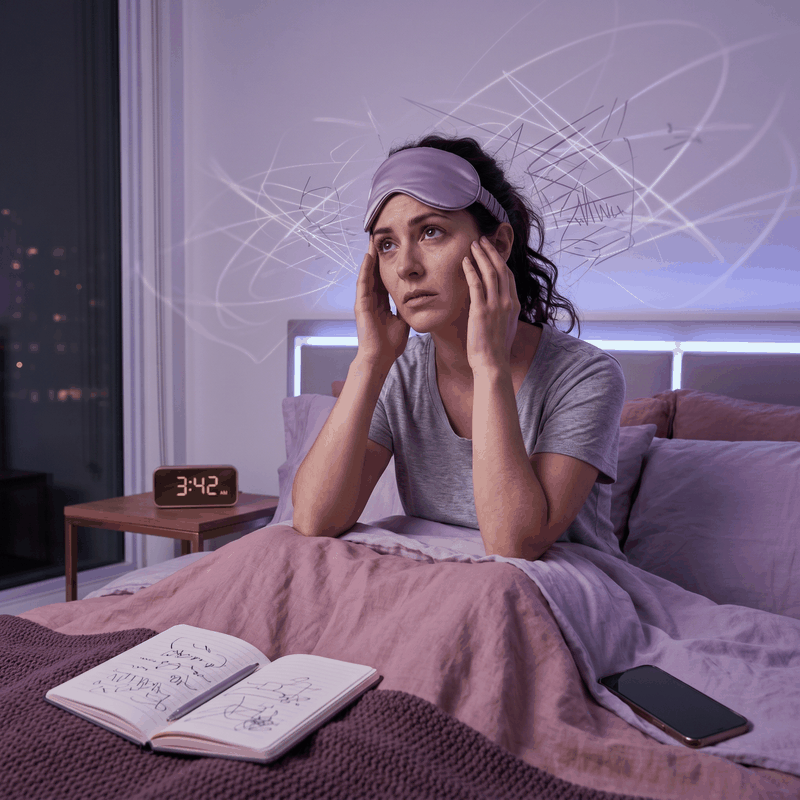
Racing thoughts are usually made of words. The email you didn't send. What she said at lunch. What you'll cook tomorrow. Music can drift underneath those words without touching them. A gentle voice gives your mind different words to follow: "Let your shoulders drop. Breathe out slowly." Bit by bit, the voice crowds out the noise.
A voice also helps if you're anxious about doing it wrong. Someone tells you when to breathe, where to rest your hands, what to notice. You don't have to remember anything.
There's evidence that structured breathing helps, too. In a 2023 Stanford study, 5 minutes a day of cyclic sighing (two inhales through the nose, one long exhale through the mouth) for a month improved mood and lowered breathing rate. In that study it helped more than mindfulness meditation. So if you're anxious, a voice that guides your breathing may be a good place to start.
For nights when sleep won't come, the MySakhi guided meditation Let Sleep Find You is about 10 minutes of slow, soft guidance.
What does music do that a voice can't?
Music asks nothing.
No instructions to follow. No moment where you realise you stopped listening three minutes ago and feel you've failed. It simply plays, and you can drift in and out of it as you like.
That makes music kind on the days when you're talked out, when every person in your life has wanted something, or when tears are close and you don't want to be told how to feel. A 2022 Cochrane review found that listening to music may improve sleep quality for adults with insomnia, so it can be a good companion at bedtime too.
Try What If You Just Stopped?, built on Raga Malkauns with the soft, rippling sound of a santoor. It's about 4 and a half minutes.

Music vs guided meditation: a quick guide by mood
Check in with yourself for one breath, then pick:
- Thoughts racing in full sentences: choose a guided voice.
- Talked out, everyone wanted something today: choose music.
- Anxious, heart quick, chest tight: start with a guided breathing practice, then let music follow.
- Sad or grieving: music first. Add a voice if you'd like company.
- New to this and worried about doing it wrong: choose a guided voice.
- Everything feels too loud: very soft music at low volume, or a short practice like When Everything Is Too Loud. When everything feels too loud explains why this happens in midlife.
- Can't decide at all: tell Sakhi how you feel and let her choose.
जो आज ठीक लगे, वही सही है. Whatever feels right today is right. Tomorrow you might choose differently, and that's fine.
Is listening to music a form of meditation?
It can be. If you're paying gentle attention to the sound, noticing the drone, following the melody, coming back when your mind wanders, that is a practice. It doesn't need a special name.
Not this: "I should be able to sit in silence for twenty minutes, or it doesn't count." This instead: whatever brings you to a slower breath tonight. That counts.
Can you combine the two?
Yes, and many women find this the easiest way in. Play a short guided practice of 5 minutes or less and let the voice do the steering. When it ends, don't reach for your phone or the next thing. Press play on one music track instead, and let your out-breath be a little longer than your in-breath for the first few breaths. If you fall asleep before the music ends, perfect.
You can't do this wrong. If a voice irritates you tonight, switch it off. If a piece of music makes you sad, it's okay to let it. It's okay to change your mind halfway through.
Where can you find guided voices and music from MySakhi?
MySakhi is a free app for women in perimenopause and menopause, with short guided breathing practices, sleep stories, calming 432Hz music and Sakhi, an AI companion who suggests what might help tonight. You can also browse everything free on the website in the MySakhi library.
For guided voices, all 30 English guided practices are episodes on the podcast MySakhi Meditation, Sleep & Wellness for Women. Free guided breathing on Spotify and Apple Podcasts shows you where. On music stores, search MySakhi for the spoken albums Deep Sleep Meditation for Women and Anxiety Relief Meditation for Women.
For music, visit the MySakhi artist page on Spotify, or search MySakhi on Apple Music and Amazon Music. If you're brand new to guided practices, the beginner's guide to meditation in menopause is a gentle start. And if words feel too much on a heavy day, music for emotional healing has three tracks to try.
What does your mind need tonight: someone to guide it, or something to rest in? Tell Sakhi how you feel and she'll suggest a voice or a song for this moment.
5 minutes. No mat. No mantra. Just you.
Questions women ask
Is music or guided meditation better for sleep?+
Neither is better for everyone. A guided voice helps when your thoughts are racing, and music helps when you're talked out or overstimulated. Many women play a short guided practice, then music.
Is listening to music a form of meditation?+
It can be. If you're gently paying attention to the sound and coming back when your mind wanders, that is a practice.
What if guided meditation voices annoy me?+
That's common, especially after a day full of talking. Try instrumental music instead, or a very short guided practice of 5 minutes or less.
Where can I find MySakhi guided practices and music?+
The free MySakhi app has guided practices, sleep stories and 432Hz music. The guided practices are also a podcast on Spotify and Apple Podcasts, and the music is on Spotify and YouTube under MySakhi.
Listen free, wherever you are