Low Libido in Menopause: Reconnecting With Your Body Without Pressure
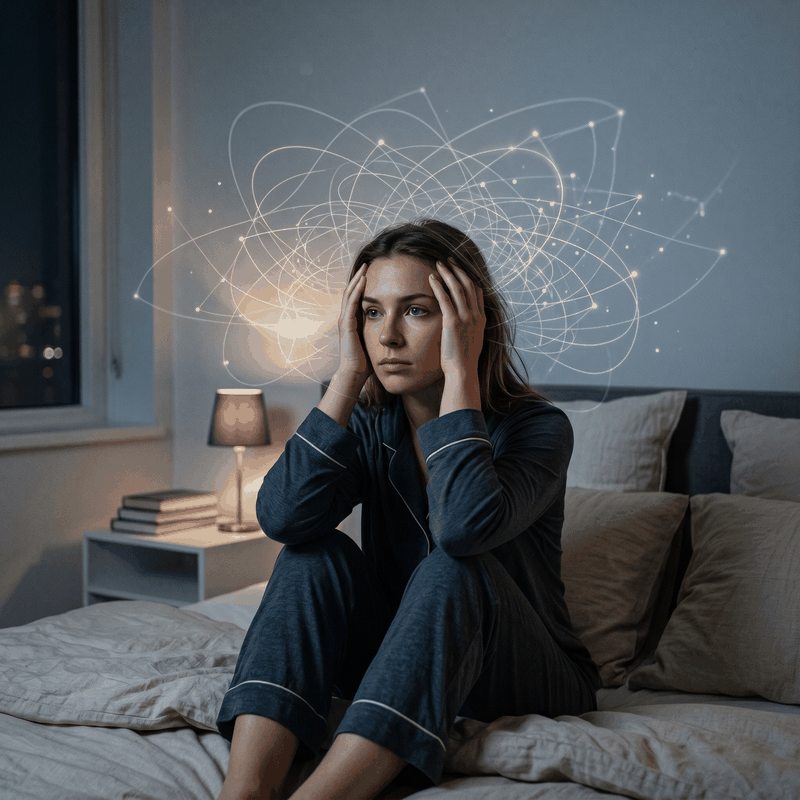
It's late. The lights are off, the house is finally quiet, and you feel a hand settle on your hip. Something in you goes still. You keep your breathing slow and even, as if you're already asleep, and lie there feeling guilty, relieved and sad all at once.
Or maybe there's no one beside you, and what you've noticed is quieter. You can't remember the last time you even thought about desire. You're not sure whether you miss it. मन ही नहीं करता. The wanting has simply gone silent.
Whichever is closer to your life, please know this: you are not broken, you are not cold, and you are not the only one.
In short: Low libido in menopause is common. Shifting hormones, vaginal dryness, broken sleep, night sweats, low mood, stress and changes in how you feel about your body can all quieten desire. It is not a failing. Vaginal dryness is common and treatable, so it's worth talking to a doctor. Gentle, pressure-free reconnection, starting with 5 minutes of breathing, may help you feel at home in your body again.
Why does libido drop in menopause?
Desire isn't a switch. It's more like a small flame that needs the right conditions: rest, ease, feeling safe and feeling like yourself. Perimenopause can quietly take away several of those at once.
Shifting hormones play a part. Falling oestrogen can make vaginal tissue thinner and drier, so touch that once felt good can feel uncomfortable or even painful, and the body learns to brace. Night sweats and 3am waking leave you exhausted. Low mood and anxiety dim interest in almost everything. And midlife often brings a pile of other loads: teenagers, ageing parents, work, money worries, and very little time that is truly yours.
Then there's how you feel in your own skin. If your shape, your skin or your energy have changed, it can be hard to feel desirable, even to yourself.
Put it all together, and it would be surprising if desire didn't change. This isn't a lack of love. It's a lot.
Is it normal to have no sex drive in perimenopause?
Yes, it's common, and it's one of the least talked-about changes of midlife. Many women carry it silently, worried that something is wrong with them or with their relationship.
It can help to know that for many women, especially in midlife, desire doesn't always arrive first. It often shows up after closeness has begun, once you feel relaxed, safe and comfortable. Not wanting to start something doesn't mean you can't enjoy closeness once you feel at ease. And if you don't want it at all right now, that's okay too.
It's okay to not want it right now
You are allowed to say no. You are allowed to say "not tonight". You are allowed to want closeness without it leading anywhere. Your body is not a duty to be performed or a problem to be solved.
Not this: forcing yourself, or avoiding all touch so that nothing is expected. This instead: honest, gentle closeness on your own terms.
If you have a partner, it may help to say something simple, on a calm day rather than in the moment: "I love you. My body is changing and I don't always feel like it, but I miss being close to you." Holding hands on an evening walk, a long hug in the kitchen, lying together with no expectation. These count too. Our post on menopause and marriage has more on talking it through.
How do you reconnect with your body after menopause?
Before closeness with anyone else, there's closeness with yourself. So many of us have spent years living from the neck up, using our bodies as tools to get through the to-do list. Coming back starts small.
You don't need to feel sensual. You need to feel safe in your own skin, even for five minutes. You can't do this wrong, because there is nothing to get right.
Try this now: 5 minutes of coming home to your body
- Find somewhere private and comfortable: your bed, a warm bath, or a chair with the door closed.
- Place one hand on your heart and one low on your belly, and feel the warmth of your own palms.
- Breathe in slowly through your nose and let your belly soften under your hand. Breathe out a little longer than you breathe in.
- Slowly stroke one forearm with your fingertips, or rub a little oil or cream into your hands or feet. Notice what feels pleasant, with no goal at all.
- Think or whisper one kind sentence: "This body has carried me a long way."
- Rest for one final minute before you get up.
That's all. No performance. No outcome. Just a few minutes of your body being treated kindly by the person who knows it best.
Rekindling the Flame Within is a gentle guided meditation for warmth and self-connection, without pressure. For the days you feel far away from your own body, This Skin Is Sacred is a tender place to start. You can play both right here, whenever you have a quiet moment.

When should you talk to a doctor about low libido?
Vaginal dryness is common in menopause, and it is treatable. There are several options, with and without hormones, and a doctor or gynaecologist can talk you through them. You don't have to put up with discomfort or pain.
Please also see your doctor if sex has become painful, if you notice any bleeding after menopause, or if low desire comes with low mood that doesn't lift. Some medicines can affect desire too, so mention anything you take. Saying the words out loud in a clinic can feel hard. It's okay to write them down and hand over the note.
If you ever have thoughts of harming yourself, contact your local emergency services or a crisis helpline now.
You are allowed to take your time
There's no deadline for this. Desire may come back gradually. It may come back differently. What matters is that you meet yourself with patience rather than pressure.
What if this season isn't about getting your old self back, but about getting to know the woman you are now? आप अकेली नहीं हैं. You are not alone in this, and you never were.
If changes in your body have been weighing on you, our post on body image after 40 may feel like a kind conversation. And pelvic floor breathing is another gentle way to reconnect with this part of yourself.
Tonight, press play on Rekindling the Flame Within, or tell Sakhi how you've been feeling. She won't judge, and she'll suggest a practice for this moment.
5 minutes. No mat. No mantra. Just you.
Questions women ask
Is it normal to lose your libido in menopause?+
Yes, low libido is common in perimenopause and menopause. Shifting hormones, dryness, poor sleep, stress and low mood can all quieten desire. It isn't a failing, and a doctor can help you look at what's playing a part.
Can vaginal dryness in menopause be treated?+
Yes. Vaginal dryness is common in menopause and treatable, with options both with and without hormones. A doctor or gynaecologist can talk you through what might suit you.
How do I tell my partner I don't feel like sex?+
Choose a calm moment, not the bedroom. Try something simple like: 'My body is changing and I don't always feel like it, but I miss being close to you.' Closeness without expectation can ease the pressure for you both.
Will my libido come back after menopause?+
It's different for every woman. Desire can return gradually or in a different form, especially once sleep, dryness and stress are looked after. Go gently, and talk to a doctor if it's worrying you.
Listen free, wherever you are