Body Image After 40: This Body Is Still Yours
Someone posts the photos from your cousin's wedding in the family WhatsApp group. Before you've even seen your niece's smile or your father dancing, your eyes have found your arms, your stomach, the softness under your chin. You zoom in. You zoom in again. Then you put the phone face down on the counter and feel the whole evening turn grey.
It was a lovely wedding. You were there. You laughed. And somehow, one photo has taken all of that away.
In short: Body image after 40 often shifts because your body really does. Perimenopause, which lasts about 4 years on average, can change your shape, skin, hair, sleep and energy, so feeling unsettled is normal. What helps is not fixing your body but changing how you treat it: noticing the inner critic, choosing kinder words and spending 5 minutes inside your body instead of judging it from outside.
Why does body image after 40 feel so hard?
First, because your body is genuinely changing. Shifting hormones in perimenopause and menopause can change where you carry softness, how your skin feels, how thick your hair is and how your joints move in the morning. You are not imagining it. If hair and skin changes are part of it for you, our post on hair thinning and skin changes in menopause explains what's happening.
Second, because you have been hearing about your body for decades. From magazines. From advertisements. From relatives at every family function. You probably know the exact tone of "अरे, तुम कितनी बदल गई हो!" (Oh, how much you've changed!) and how it can follow you home.
Third, because many women describe feeling less seen as they get older. Not looked at, not listened to, not asked. That feeling of invisibility can make the mirror feel even harsher.
Your body is not a before picture
This post won't give you a diet, a challenge or a "before and after". Your body is not a project to complete or a problem to solve. It's where you live.
It's okay to miss the body you had at 30. It's okay to not love your body every day. You are allowed to feel neutral about it, simply respecting it for carrying you through the day.
You don't need to love every inch of yourself. You need to stop treating your body like an enemy.
What if you spoke to your body the way you would speak to your daughter, your sister or your oldest friend?
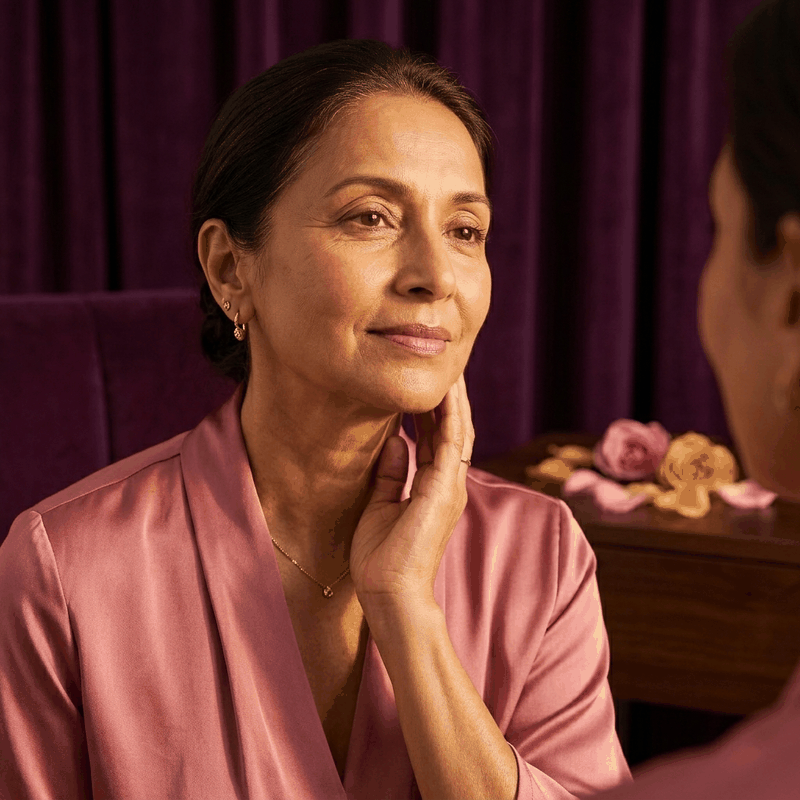
This Body Is Still Yours is a short guided practice for the mornings when the mirror feels unkind.
What is your inner critic actually saying?
Most of us have a running commentary we barely notice. "Don't wear that." "Hide your arms." "Stand at the back of the photo." Try writing down the exact words for a day or two. Then ask one question about each: whose voice is this?
Often it isn't really yours. It belongs to a relative, an old classmate, a magazine cover from 1998. Once you can hear it as a borrowed voice, it gets a little easier to answer back.
Not this: "My arms are disgusting."
This instead: "These arms have carried children, shopping bags, grief and gold bangles at every wedding. They're still working."
Small ways to feel at home in your body again
You don't need a whole new relationship with your body by next week. Small kindnesses add up:
- Wear clothes that fit the body you have today, not the one you're waiting to have.
- Move for how it feels, not how it looks. A walk at dusk. Dancing in the kitchen while the dal cooks.
- Bring back an old ritual of care: oiling your hair or massaging your feet before bed, just for you.
- Mute or unfollow accounts that leave you feeling worse about yourself.
- When you look at photos, look for the moment first. Who was laughing? What were you celebrating?
If this kind of care sets off a wave of guilt, you are far from alone. Our post on self-care guilt in midlife explores why.
Try this now: the 5-minute thank-you body scan
You can do this lying in bed before sleep or sitting in a chair in the morning. No mirror needed. You can't do this wrong.
- Lie down or sit back comfortably. Close your eyes if that feels okay. Take three slow breaths, letting each breath out be longer than the breath in.
- Place your hands on your legs and silently say one thing they have done for you: "You've walked me everywhere."
- Move your hands to your belly. Let it be soft. Thank it for something real: "You've held my breath, my food, maybe my children."
- Rest your hands on your arms, then on your chest. Name one thing each has done: held, carried, hugged, kept going.
- Finish with both hands over your heart and say quietly, "This body is still mine." Stay for a few more breaths.
If your mind slips back into criticism, that's okay. Notice it, and return to the next breath.
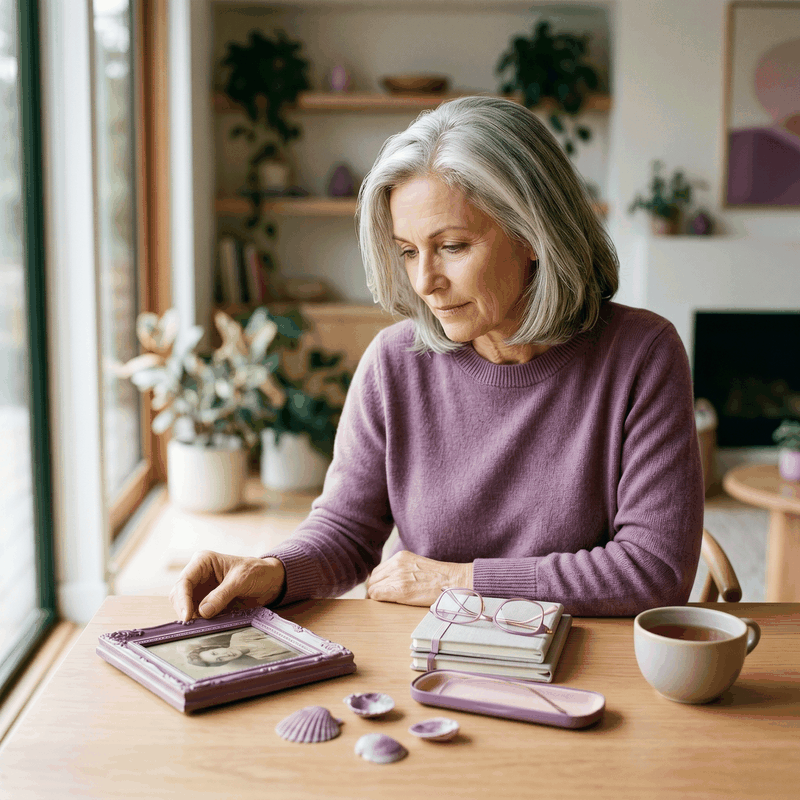
I See You is for the days when you feel unseen, by the world or by yourself.
When should you talk to someone?
If thoughts about your body start to take over, for example if you avoid mirrors, skip family events or food has become a battle, please talk to your doctor or a counsellor. You deserve support, not just willpower. And any sudden or unexplained changes in your body are always worth checking with a doctor. You can also look through our full list of menopause symptoms to see what's common in these years.
If you ever have thoughts of harming yourself, contact your local emergency services or a crisis helpline now.
Tonight, before you sleep, what if you put a hand on your belly and said thank you instead of sorry? Then press play on This Body Is Still Yours, or tell Sakhi how you're feeling about your body today. यह शरीर अभी भी तुम्हारा है. This body is still yours.
5 minutes. No mat. No mantra. Just you.
Questions women ask
Why is body image harder after 40?+
Your body really is changing. Perimenopause, which lasts about 4 years on average, can change your shape, skin, hair and energy, and decades of comments and media messages can make those changes feel harder to accept.
Is it normal to dislike my body during menopause?+
Yes, it's very common to feel unsettled as your body changes. It's okay not to love your body every day. Many women find it easier to aim for respect and kindness rather than constant love.
How can I feel better about my body after 40 without dieting?+
Wear clothes that fit you now, move for how it feels, mute accounts that make you feel worse and try a 5-minute thank-you body scan, naming one thing each part of your body has done for you.
What is body neutrality?+
Body neutrality means respecting your body for what it does, without needing to love how it looks. It can feel more realistic than body positivity on hard days.
When should I get help for body image worries?+
If body thoughts start to take over, such as avoiding mirrors or events, or food becoming a battle, talk to your doctor or a counsellor. Sudden, unexplained body changes should always be checked.
Listen free, wherever you are